Our Story
Inspiration
Open Space Environmental began in 2021 out of curiosity about how sustainable land clearing could complement our contract management work in land development. With experience in managing the design and construction of trails and amenities throughout greenbelts and open spaces, we were challenged with improving line of sight, safety, and the natural forest conditions.
Amber joined Open Space in 2023 and brought a background in erosion control and an understanding of how ruminants reduce vegetation and improve site conditions. With an understanding of erosion control, project management, and construction, Open Space Environment offers a unique ability to address fire mitigation, flood mitigation, and prairie restoration by clearing those hard to reach areas with ruminants.

Where it Started
Our first project started May 2021 in a native hardwood forest located in McKinney, Texas. We tested our metrics in Denton, Corinth, and other North Texas locations, mostly reducing vegetation density and address areas where homeless encampments were hidden. In Denton, the parks director noted our how our operation complimented their initiatives to sensitively clear and address safety concerns along a DART trail. Throughout 2024, our typical jobs were under 10 acres; however, seeing how effectively the goats handled these jobs in a sustainable, natural way motivated us to look to larger, more complex jobs.
Before this, we did not have direct experience in environmentally friendly land clearing. Our background was (and still is) in managing construction development. However, we knew this work could be a powerful tool for both private and public landowners. Today, we partner with herders who manage the livestock, while we work closely with clients and the public to plan, communicate, and oversee each project. It has been an exciting journey over the last 5 years.

Along the Way
We have learned a lot as this operation has grown. Early on, one of our biggest challenges was securing the right insurance coverage. We also had to refine our on-site monitoring to make sure the herd moved safely and effectively through each project. Perhaps the biggest hurdle, though, was that no matter how much we explained the process, people wanted to see it in action. Selling the outcome was much harder at first than it is now. As we have shown clear results in the field, the public has loved watching the work unfold. This approach has also become more widely accepted in the landscaping and land management sectors, and we are excited to see projects continue to roll in year after year.
We realized this was a truly scalable business once we had several clients across different markets, including the City of Dallas, a private land developer, and an individual landowner. They all wanted the same kind of work done. From there, it became a matter of meeting the growing demand.

Growth
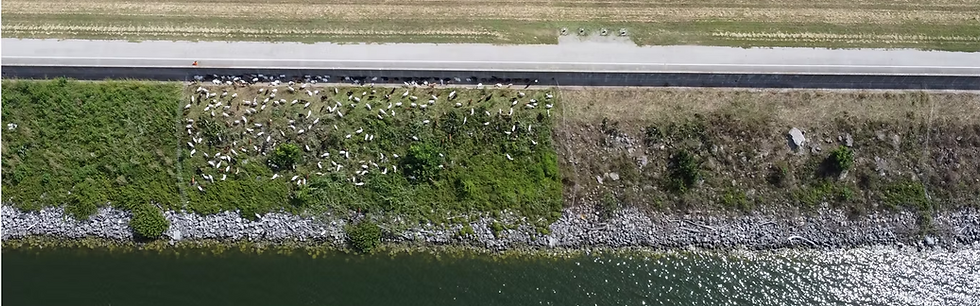
Our understanding of how ruminants impact vegetation, how projects need to progress, and what contractual requirements are involved has grown a lot over time. We have become very skilled at managing all of those pieces. Some things, however, have stayed simple: we still deliver and manage 400 to 600 goats or sheep on site. That core process has not changed, but we have become much more efficient at tracking and guiding it.
We have also evolved into a fully environmental company. At first, we saw this as another form of contract management, focused mainly on coordinating with the client and the work on the ground. Now we are much more involved with our herding partners and actively monitor progress in the field. We also help define and deliver the final outcome for each customer, whether that means reseeding, clearing trash and debris, or identifying erosion control issues that need attention. Today, we operate as an all-encompassing environmental company.
Seasonal Trends
Demand for our services follows clear seasonal trends. In the winter, we do a lot of privet clearing. Once the deciduous trees have lost their leaves, we can focus on evergreen invasives. In the summer, we focus on reducing noxious weeds and vegetation, such as poison ivy, poison oak, briars, and dense grasses.
Demand also varies by region. West Texas does not have the same level of vegetation as East Texas. In areas like Northeast and South Texas, we consistently see a strong need for our services.

Clients
We have cleared land for municipalities, developers, and private landowners, and we are now also doing federal grant clearing. This is the first time this type of work has been done in Texas, and we are proud to be leading the way. It is exciting to be expanding and serving a broader client base.
Most of our business comes from North Texas, but we work anywhere in the state. We help clients clear clogged drainage ways, remove understory to improve tree canopy health, and open up areas where machines or people would be at risk. Ruminants can also safely clear areas with heavy poison ivy, taking that risk off maintenance crews.

Why use sheep and goats?
There is a long history of using ruminants to clear land on the West Coast, in the Rockies, and in the Midwest. Most often, they are used to reduce fuel loads in forests or arid regions that are prone to fire. We knew there was strong precedent for this approach. Here in Texas, we focus primarily on clearing waterways and greenbelts and on targeted vegetation abatement. In addition to reducing fire risk, we are usually removing dense, unwanted vegetation.
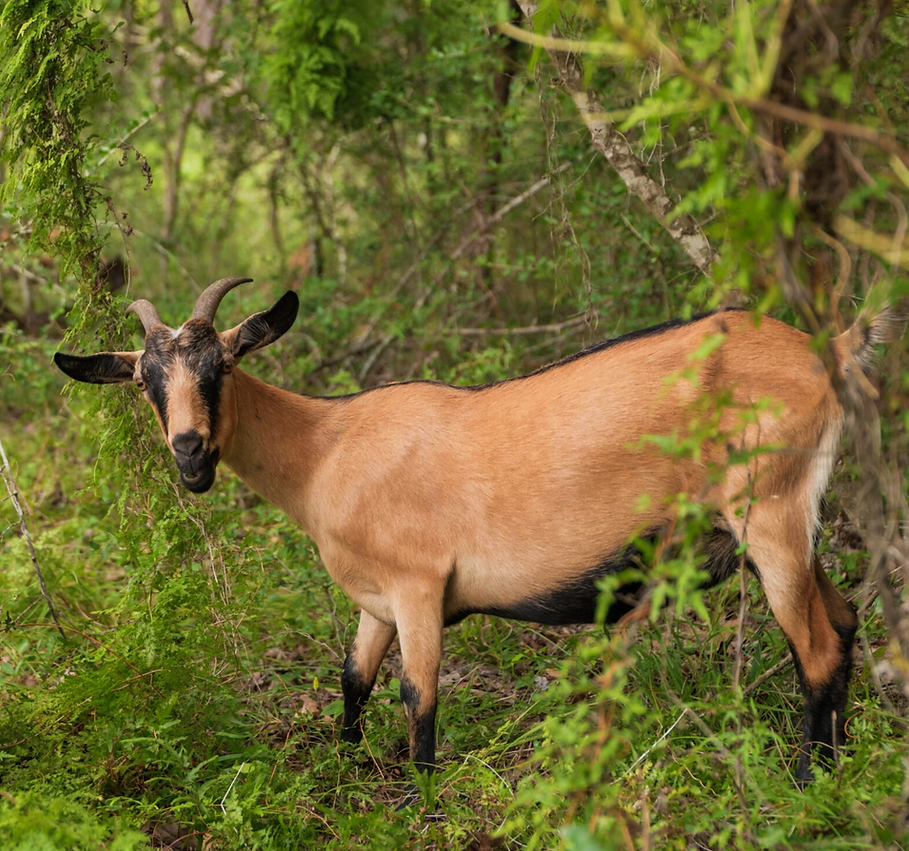
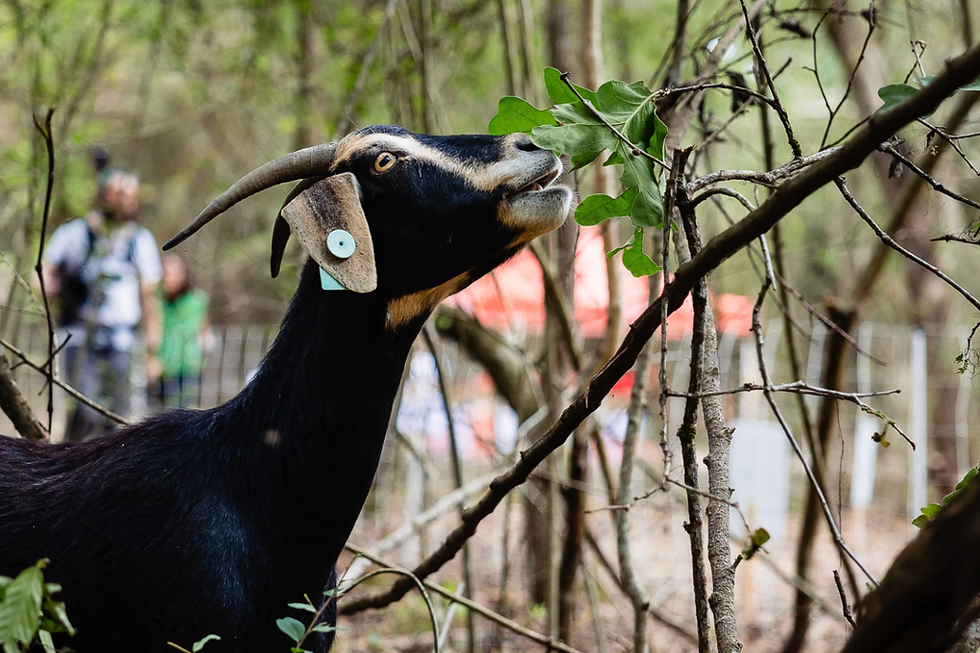
In terms of breeds, we use Spanish and Boer goats. They are hardy, resilient animals with a strong appetite for vegetation.
Herd Health and Safety
Keeping the herds behind electric netting protects them from predators. Our crews and partners do an exceptional job monitoring the animals’ vitamin, protein, and carbohydrate intake. We also watch closely for poisonous plants and keep the herds away from any toxic vegetation on a job site.
The goats are raised within electric fencing on the operations ranch, so they are already comfortable with the fencing before they ever work on a public site.
On every project, our partners provide an expert herder, and we maintain 24/7 on-site oversight and herd management.
Typical Job Process
To assess a site, we look at the density and type of vegetation, as well as the specific area the customer wants cleared. We also make sure there is adequate water on site. Once the assessment is complete, we contract with the customer, mobilize the herd, and begin the clearing work. As the project progresses, we document the site with photos and videos and make sure each corral is cleared as thoroughly as possible. Finally, we offload the goats and move on to the next site. On a typical job, we clear about 2 to 6 acres per day, depending on vegetation density, terrain, and herd size.

Environmental Impact
When the herd moves through a site, their hooves create traction and naturally fertilize the land at the same time. This gentle tilling action helps the soil absorb more water, which over time supports groundwater recharge instead of letting water sheet off the surface. We are also working against a major pollinator decline here in North Texas. By maintaining existing prairies and helping create more urban prairies, we are actively supporting pollinator habitat.
Many people want an apples-to-apples comparison between our process and traditional landscaping. A crew of 6 using mechanized equipment can usually clear 1 to 2 acres a day. However, their methods often stimulate faster regrowth, so vegetation comes back more quickly. Crews also need to haul in trailers, machines, and fuel, which adds cost and impact, and there are usually haul-off fees for all the green waste they generate. There is also a hidden cost when crews are exposed to poison ivy or poison oak. If a few workers get a bad case, they may be out for days or even a week, which is expensive for any operation. Our goats, on the other hand, achieve similar clearing results without the rapid regrowth, without green-waste haul-off, and without putting people at risk of a lengthy recovery from poison ivy.
Future Growth and Vision
We are focused on serving private landowners with 2 to 5 acres to clear, and we are also working to connect with larger projects, such as major easements, utility corridors, and rights-of-way.
Education is a big part of our mission. We want to continue informing the public, municipalities, and large landowners about the value of restoring healthy land. We need to bring back our prairie systems and rebuild resilient landscapes, and that only happens when we work together. As we educate more people about what our environment needs, our business grows alongside that shared effort.